Forty minutes into a meeting about which supplier to use, one colleague says, “I just have a good feeling about the second one.” Another opens a spreadsheet with nineteen columns. A third wants to hear from the warehouse team first, and a fourth suggests waiting until next quarter, just to be safe. Nobody is wrong, exactly. They are deciding in different ways, and the meeting ends with no decision at all.
If that scene feels familiar, the problem is rarely intelligence or goodwill. It is usually a clash of styles that nobody has named.
Four styles you will recognize
People do not fit neatly into one box, and most of us switch depending on the stakes. Still, four broad tendencies show up in almost every workplace.
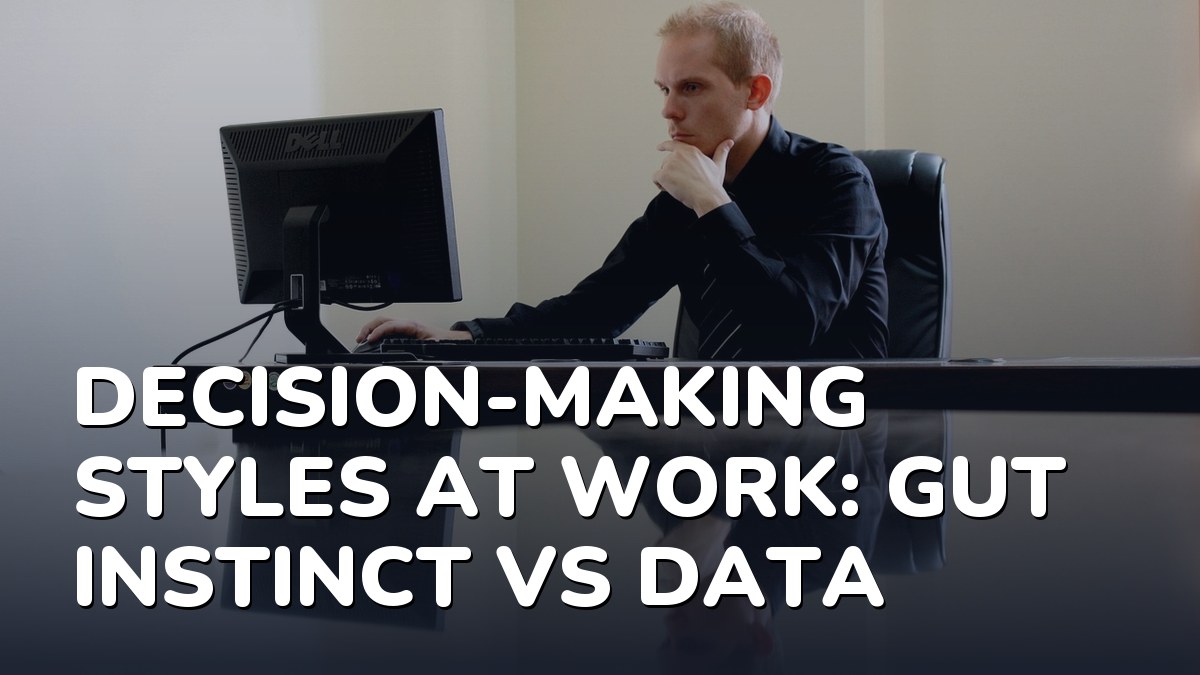
Instinct first. These colleagues decide quickly, based on experience and pattern recognition. They are valuable when speed matters and the situation looks like something they have handled before. Their weak spot is new territory, where past patterns can mislead.
Data first. They want numbers, comparisons and evidence before committing. They catch expensive mistakes and make decisions easier to defend later. Their weak spot is that there is always more data to gather, and waiting has a cost too.
Collaborative. They want the people affected to have a say. Decisions made this way tend to stick, because people feel ownership. The risk is slowness, and sometimes a watered-down option that offends nobody and helps nobody much either.
Cautious. They look for what could go wrong and prefer to delay or reduce risk. Every team needs someone who asks “what if this fails?” The risk is a team that never moves.
If you are not sure which one describes you, the decision-making style quiz is a quick, light way to reflect on it. It is meant for fun and self-reflection, not as a formal assessment, but people often find the result a useful starting point for a conversation with their team.
Why they collide in meetings
Each style reads the others as a flaw. To the instinct person, the data person looks like they are stalling. To the data person, the instinct person looks reckless. The collaborator sees both as ignoring the people affected, and the cautious colleague worries that everyone else is moving too fast.
Meetings make it worse because they reward whoever speaks first and most confidently. Quick deciders tend to set the direction, and slower, more careful thinkers often raise their concerns after the meeting, by message, which can feel like reopening a closed question. Disagreements about how to decide easily turn into personal friction. If that friction is already showing up, the conflict style quiz can help people see how they tend to respond when tension rises.
One decision, four people
Take a small marketing team deciding whether to delay a product launch by two weeks because the landing page is not finished.
Dana (instinct) says launch on time with a simpler page: “We have done this before, it will be fine.” Raj (data) wants to check how many sign-ups past launches got in the first two weeks before choosing. Mia (collaborative) wants to ask sales, who promised the date to clients. Tom (cautious) wants the delay, because a weak page could hurt first impressions.
Left alone, this becomes a long thread. Instead, the team lead asks three questions. Who owns this decision? Mia, as launch manager. When is it due? Thursday at noon, because the email campaign is scheduled for Friday. How reversible is it? Fairly reversible: a simple page can be improved after launch, while a missed date with clients is harder to undo.
That framing gives everyone a role. Raj pulls last year’s numbers by Wednesday. Mia checks with sales the same day. Tom lists the two or three things that would make the simple page embarrassing, and Dana fixes them. On Thursday, Mia decides to launch on time with the improved simple page. Not everyone agrees, but everyone knows who decided, why and when.
Three rules that settle most arguments
Name a decision owner. One person, not a committee. Others can advise, push back and supply data, but one name makes the call.
Set a deadline. Data-first and cautious colleagues relax when they know how much time they have to look into things. Instinct-first colleagues relax when they know it will not drag on forever.
Ask how hard it is to reverse. Some decisions are like a door you can walk back through: a new meeting format, a trial tool, a draft schedule. Decide those fast and adjust. Others are hard to undo: a long contract, a hire, a public announcement. Those deserve the slower, data-heavy, consult-everyone treatment. Much of the friction between styles disappears once a team agrees which kind of decision is on the table.
Keep a short decision log
A decision log is a shared document where the team records important calls. It takes two minutes per entry and saves a lot of “wait, why did we do this?” later. Keep it simple:
- The decision, in one sentence
- The owner and the date
- The main reason, plus any option seriously considered and rejected
- A date to check whether it worked
Review the log every month or two. You will start to notice patterns, such as quick calls that held up well or careful ones that took too long for little gain, and your team will learn which style suits which kind of problem. For more ways to get a team talking about how its members work, our team building quiz guide has formats that fit into a regular meeting.